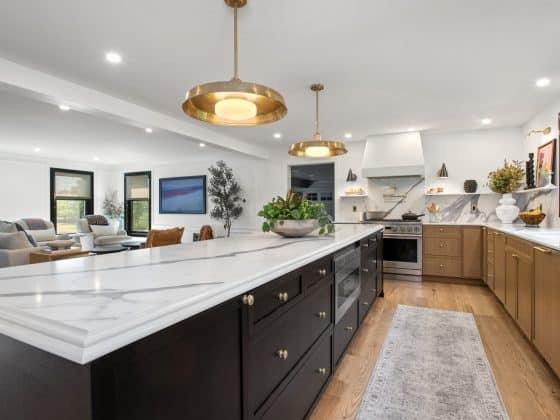
Wise Stone Choice embarked on a project in Fort Wayne, utilizing Taj Mahal Quartzite for an old-school vanity. The unique request for an OG edge in the bowl, on the profile edge, and on the backsplash highlights a client with a clear vision for a classic aesthetic.
The choice of Taj Mahal Quartzite reflects a desire for a sophisticated and timeless look, complementing the traditional OG edge detail. This project required meticulous craftsmanship to achieve the specified edge profiles, ensuring a cohesive and elegant final product that met the client's specific design preferences.
Material used: Quartzite
Location: Fort Wayne, IN
Find answers to the most common questions about quartzite here.
Quartzite is a natural stone formed under intense heat and pressure, making it extremely dense and durable. Quartz, on the other hand, is an engineered product made from ground quartz minerals combined with resins and pigments. Quartzite offers natural movement and variation similar to marble but with greater hardness. Quartz provides more uniform patterns and does not require sealing. The right choice depends on whether you prefer a natural stone aesthetic or a manufactured surface with consistent design.
Yes, quartzite is one of the hardest natural stones used for countertops. It ranks high on the Mohs hardness scale, meaning it resists scratching from everyday kitchen use. It is also highly heat resistant, making it well-suited for busy kitchens. However, like most natural stones, it is porous and should be properly sealed to help protect against staining.
Quartzite requires routine care but is not considered high maintenance. It should be sealed as recommended by your fabricator to reduce absorption and staining. Daily cleaning with mild soap and water is typically sufficient. While it is more resistant to etching than marble, spills should still be cleaned promptly to maintain its appearance over time.